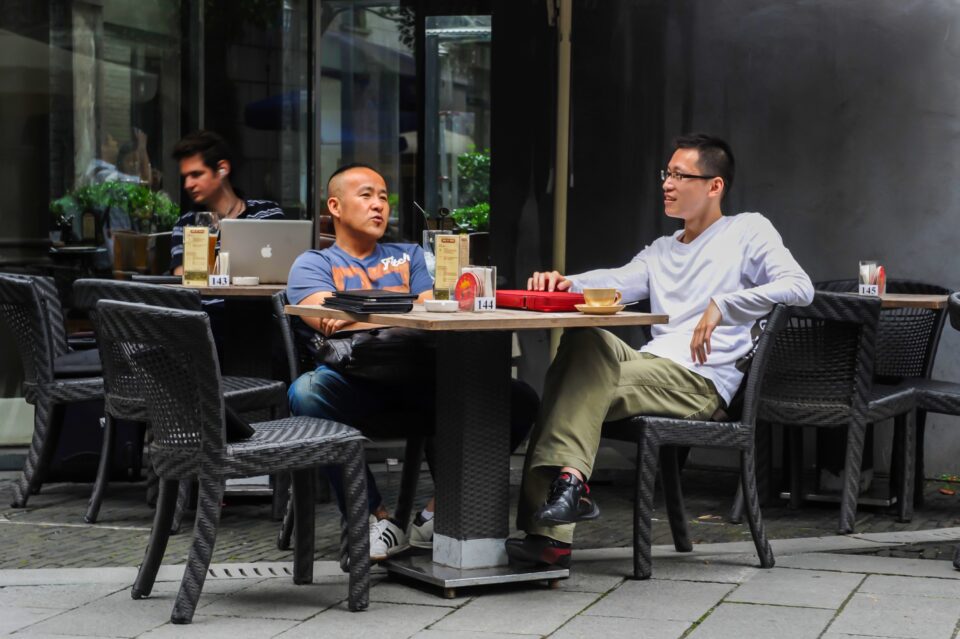
Hi folks, I hope you’re doing okay. This week we’re meeting at the Enigma Tap at 7.30, and it would be great to see you there if you can make it.
A little while ago, I went along to a meeting in North Shields organised by Citizens UK, and I have to say, I came away feeling quite encouraged.
Citizens UK is a people-powered alliance that brings together local communities, faith groups, schools, colleges, trade unions and community organisations to work together for change. The idea isn’t just to campaign for people, but to organise with people. That means listening to what matters to people, building relationships, finding the things we have in common and then seeing what we might be able to do together.
They already have a Northern hub, and there have been some really practical results from this kind of community organising. Locally, they have been involved in work around more affordable bus travel for young people, as well as improvements to parks and public spaces.
These might sound like fairly ordinary things, but they are actually the things that make a real difference to everyday life. Can I afford to get to college? Is there somewhere safe and pleasant for my kids to play? Does my neighbourhood feel like somewhere I want to be part of?
The meeting brought together people of faith and people of no particular faith, all with an interest in thinking about some of the challenges facing our communities.
One of the things we talked about was the tendency to “other” people. That is, the habit of dividing the world into us and them, insiders and outsiders, people who belong and people who don’t.
It feels like an important thing to think about as we head into the summer and beyond.
When people feel anxious, unheard or uncertain, it can be tempting to look for someone to blame. It might be the person who has recently arrived in the country, someone who speaks a different language, someone who worships differently, or simply someone whose life and experiences we don’t really understand.
But perhaps one of the things we can do is resist the temptation to turn people into categories.
For me, this connects strongly with the heart of the Gospel. Jesus had a habit of crossing boundaries. He ate with people others avoided. He spoke with people others ignored. He told stories where the person everyone expected to be the outsider turned out to be the neighbour.
The question in the story of the Good Samaritan isn’t just, “Who is my neighbour?” It’s also, “How do I become a neighbour?”
I think that’s quite an important shift.
It moves us away from thinking of community as something that belongs to us, and towards seeing it as something we create together.
I wonder if that’s part of what we mean by the Kingdom of God. Perhaps it’s not about everyone becoming the same, but about learning to live together in ways that recognise the dignity and worth of every person.
I think about the story of Pentecost. The Spirit doesn’t seem to erase everyone’s differences or turn everyone into one big identical group. Instead, people somehow find ways to hear and understand one another across those differences.
Maybe that’s part of the work we are called to do too. Not to get rid of our differences, but to build enough trust that we can listen to each other.
And this is one of the things I really liked about the Citizens UK approach. It starts with listening.
Before deciding what the problem is, listen to people’s experiences.
Before deciding what the answer is, find out what actually matters to people.
And before rushing off to fix everything, build some relationships.
That feels like quite a good challenge for us as churches too. We can be pretty good at identifying needs and coming up with projects, but perhaps sometimes we’re less good at simply sitting down with people and asking, “What’s your experience? What matters to you? What would make a difference?”
Maybe the invitation is to move from doing things for people to doing things with people.
We’ve talked a lot at Beachcomber, through our blogs, gatherings and conversations, about what it means to make a difference in our communities. We’ve explored faith, nature, belonging, justice and what it means to live well together.
But, if I’m honest, working out how to turn those conversations into meaningful action isn’t always easy.
That’s why I found this meeting so encouraging.
It felt practical without losing sight of the bigger picture. It recognised that change rarely happens because one organisation or one group has all the answers. Sometimes it happens when people who wouldn’t normally sit around the same table discover that they actually have something in common.
And perhaps that’s where we can begin.
Not by agreeing on everything.
Not by pretending our differences don’t exist.
But by being willing to sit around the same table, listen to one another and ask, “What could we do together?”
For followers of Jesus, I think there is something really powerful about the idea of the table. Jesus’ table was rarely an exclusive one. It was a place where different people came together, where conversations happened, where barriers could be challenged and relationships could grow.
Maybe our communities need more tables like that.
Tables where people can tell their stories.
Tables where we can disagree without becoming enemies.
Tables where we can meet people we might otherwise never encounter and discover that they are, in fact, our neighbours.
Tables where people of faith and people of no faith can sit together, not because we believe all the same things, but because we care about the same world.
In fact, I’m currently in the process of setting up something called the Empty Chair Project, which invites strangers to come together, sit down and have a chat. No agenda. No strings attached. Just a chance to meet someone you might otherwise never meet.
So, watch this space!
As we head into the summer and beyond, I wonder what it might look like for us at Beachcomber to create more spaces like this in our communities.
What if we became better listeners?
What if we built relationships before we tried to solve problems?
What might we discover if we spent more time with people whose experiences are different from our own?
And what could happen if, instead of asking, “What can I do?” we started asking, “What can we do together?”
I left that meeting feeling that perhaps some of the most important work of building community starts in quite simple ways.
Not with grand gestures.
Not with having all the answers.
But by pulling up a chair, making some space, listening to one another and discovering that perhaps the future of our communities is something we can build together.
Questions
- If you could instantly become brilliant at one completely random skill, what would you choose?
- What makes a community feel like a real community rather than just a group of people who happen to live or spend time in the same place?
- Can you think of a time when something unexpected brought people together? What was it about that experience that worked?
- What do you think stops people from getting involved in their communities, even when they care about what happens in them?
- If you could change one thing about the way people live alongside one another, what would you change?
Peace Rob
Image by xiaojian Xu from Pixabay

Rob Wylie is the founder of BeachcomberFX and guides its leadership team. He has worked in the North East for over 20 years and has vast experience from various roles he has held. He has a passion for Fresh Expressions of Church and Pioneer Ministry as well as beer, beaches and Miniature Schnauzers.